
From 6. – 11. 6. 2023, the 32nd edition of the IFFI (International Film Festival Innsbruck) takes over the Leokino and the Cinematograph. In cooperation with DIAMETRALE, the movie Las Demás (eng. Outsider Girls) by Chilean director Alexandra Hyland will be shown on Saturday (10.6) at 22:15 in the section Worldwide Visions. We had the pleasure to see a preview of the film and to speak with the director.
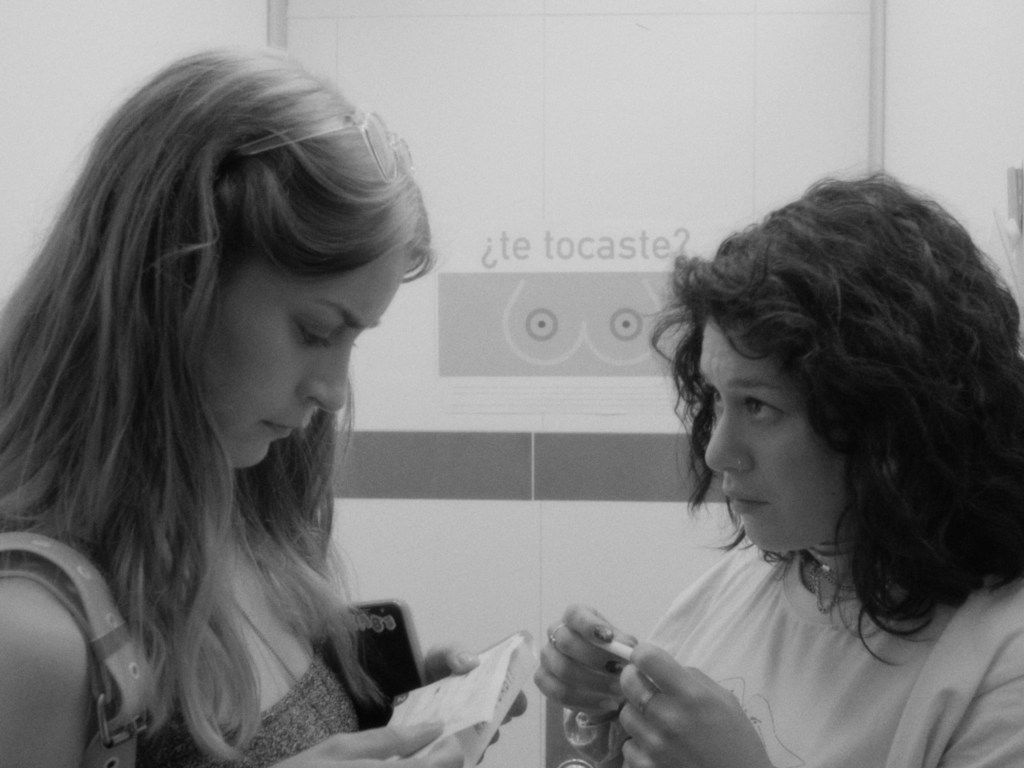
Gabby and Rafaela are students, roommates and, above all, best friends. With their shared apartment, they have built themselves a cozy nest of glitter, plush and clutter. A place where, when needed, they can retreat from the world without running the risk of loneliness. With this safe haven up their sleeves, the two conquer their city navigating between college and parties in „Sailor Moon on off days“ attire that clearly displays an open wardrobe policy among them. The lightness of their being is disrupted when Rafaela is reminded by the ketchup on her fries that she hasn’t had her period in too long. She finds out that she is pregnant.
“Do you know how awful it would be to get caught? Getting jail time, not being able to get an abortion and then they make you have a baby in jail!”, Rafaela asks Gabby. “It’d be even worse. I’d have to look after your baby while you’re having a blast in jail.”, Gabby replies. Since it is not possible for Rafaela to have an abortion legally, she is forced to resort to illegal means. (In 2016, when the screenplay was written, Chile was still one of the five countries in the world where abortion was completely prohibited by law.) When she finds a dealer who is willing to sell her the illegal abortion pills, there is one remaining problem: they cost $200 which Rafaela doesn’t have. The two friends embark on an odyssey from one odd job to the next, with the mission of raising the money as quickly as possible. Against the grim backdrop of a lack of reproductive rights, the power of friendship unfolds with all its highs, lows, melodrama, glitter, and the healing powers of a shared laugh over a Youtube video of turtles “making love”.
We had to chance to talk to the director Alexandra Hyland about her experiences as a first-time film director, her creative process, reproductive rights and more.

Las Demás is your debut film. How did you get into filmmaking?
When I went to university I initially started with journalism, specifically music journalism, which was cool because I got to go to a lot of concerts for free. But at some point, I fell in love with screenwriting. When I finished school, I started writing the script for Las Demás. I felt like my life had very poetic moments and a weird kind of vibe that I hadn’t seen in movies. I watch tons of TV and film but since most of it is created by straight men, I felt like I didn’t see my kind of stories. I wanted to write about female friendship. Most of the stuff in the movie actually happened to me and my friends. It’s almost a documentary.
When did you start working on the movie?
I started writing in 2016 and we shot the film in 2019. In March 2019 and at the end of October 2019, we had a civil uprising in Chile, so we had to put the film on hold. During the pandemic we did the editing. It has definitely been a journey. But that’s how independent films work. They take time.
What made you want to make a movie about abortion?
I’m a feminist activist, so abortion was always a big topic for me. Moreover, it is an issue that intrinsically concerns women. The fear of an unwanted pregnancy always accompanies women, because even if women use contraception, for example the pill, it can still happen. In addition, there are still men who refuse to wear condoms. This is certainly in parts due to the fact that sexual education is still lacking.
When I started writing this movie, Chile was one of the five countries in the world where abortion was still completely criminalized. Girls were often left with no other option than having abortions by themselves at home. If something went wrong and they had to go to the hospital and the people there suspected that they wanted to perform an abortion, they would notify the police. Women could go to jail for trying to have an abortion.
In my research for the film, I heard stories about girls who tried to buy illegal abortion pills from dealers that turned out to be religious fanatics. They kidnapped the girls, locked them up and tried to talk them out of their decision.
Researching this movie was very tough and it often left me crying.
Personal experiences were another reason for me to make this film. Two friends of mine had illegal abortions, and their situations were very similar to the one in the film.
Did things in Chile change since you started making this movie?
During the filming of this movie, a law was passed allowing abortion, but only in three cases: when the life of the mother is at risk, when the fetus is not viable, and in cases of rape during the first 12 weeks of pregnancy. So, in other words, it is still very much illegal. In a case like the one in the film, these girls would have no chance of getting a legal abortion today. However, in Argentina, our neighboring country, it became fully legal in 2020, so it is easier for us to get the pills.
The year after the bill passed, we had a change of governments. The new far-right government has introduced a new regulation, that of “conscious objection”. It states that the physician may refuse to perform the abortion if he or she does not feel morally aligned to do so. It’s yet another way of making abortion less accessible. How long will we have to keep fighting?
Moreover, the topic is still a big taboo in Chile. When people ask me what the film is about, I sometimes hardly dare to answer, especially because it is a comedy. In August the movie will be premiering in Chile and I’m very excited but also nervous. I hope that a lot of people will see it and that it will start a conversation.
Are you afraid of negative reactions?
Honestly no. I’m a very Zen person. Obviously, some people won’t get it or won’t like it. And if people get mad honestly that’s amazing, that’s a feeling. I would love to generate a debate. I want to get people talking. In Spanish we have a saying: “Será ley.” which means “It will be law”. I hope that someday people will see abortion as a health matter. It’s not about whether you want a baby or not. Being able to get legal abortions is a health matter.
Why did you decide to tell this story in the form of a comedy?
I watched a lot of movies about abortion. Most of them are very tragic and sad, depicting the most terrible things that can happen to a woman. And of course, these horrible things do happen. I think it’s important, though, to capture the full variety of real life on the screen, and that includes stories with positive outcomes. I also think that humor can help us deal with a awful and difficult situation. Sometimes we have to laugh so we don’t have to cry. For example, asking your friend if she wants a baby shower while waiting in line at the pharmacy to buy a pregnancy test.
But I also didn’t want to downplay how hard this situation is for women. You spend 12 hours taking pills. Some women experience strong pain although that’s different for everybody. Then you have to look through your blood to make sure it worked. It’s a difficult process and still people are claiming that women will be using this like a contraceptive method.
I want to talk about the bathroom scene when the abortion is over. It’s very vulnerable and moving. Was it a conscious decision not to conceal anything?
Yes. I really wanted it to be a kind of guidebook. We wanted to show the blood so people would see the amount of blood that is involved. It can be important information for women who find themselves in the same situation. I didn’t want it to be gory or exploitative. It’s just the one shot of blood and what it looks like.
To me it is a very special moment. Nicole looks so vulnerable and soft, it tears me up. It was very emotional for the whole crew.
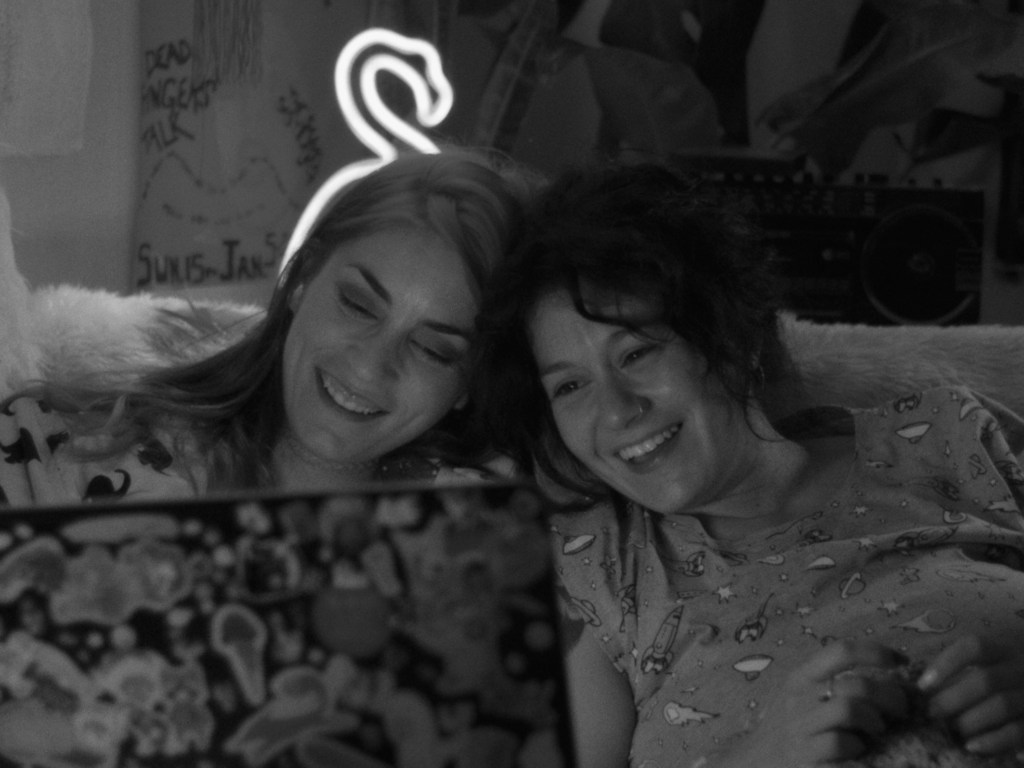
How did you find the lead actresses? They were perfect!
I love them. First, I met Alicia (Alicia Rodríguez) who portrayed Gabby. She is a very famous actress in Chile since she acted in Young & Wild which is a film about a bisexual teenager that lives in a very Catholic family. It was a huge hit in Chile. When my producer introduced me to Alicia I couldn’t believe it. We did a small teaser, and she was so good on camera it blew me away.
Sometime later I met Nicole (Nicole Sazo). She had never done film before, only theater and she’s also a dancer. We met at a cafe and five minutes in I knew: “It’s you!”.
Alicia wasn’t living in Chile, so it wasn’t easy for the two of them to meet before shooting. That made me nervous because it was really important to me that their friendship came across genuinely. I knew it would be fine because they’re professional actors, but I still wanted a very special kind of chemistry. When they finally met all my worries evaporated, because the chemistry was immediately there, it was beautiful.
What was the collaboration between you and the actresses like?
I met them more than a year before we started shooting the film, so I had a lot of time to get to know them and work with them. I tailored the script around them. For example, Rafaela’s character was much shyer in the original script. Nicole however is very much out there. When I write a script, I’m not too specific when it comes to character traits. I sort of leave a gap for the actresses to fill, because they always bring a lot to the table. I’m always open for collaboration.
I even incorporated some anecdotes they told me. For example, the scene where they are attacked by children with birthday cake. That actually happened to Nicole.
The sex scenes in the film are very positive and affirming. What was your approach?
It was very important to me that the sex scenes look good and sexy. At the same time, I wanted to create a safe space for the actors. We worked with intimacy coordination. Not with a person because we wouldn’t have been able to afford that, but we downloaded the guidelines. First, the actors decide, without the presence of the director, where they want to be touched and where their boundaries are. That way there’s no outside pressure or fear of being fired. When the boundaries have been set, the director is supposed to give very precise instructions, it’s basically a choreography. It used to be different. The only instruction often was, „Let’s go!“ Unfortunately, this approach often resulted in misconduct.
What was your approach to creating the male characters in the film?
I had a screen advisor, a guy, and he told me that he was really shocked by the way I look at men in life. I told him: “Well, I haven’t had any good experience yet.”
For Mathias I think I could have written a violent guy, a true asshole. But I just didn’t want people to see, once again, a man being violent towards a woman. Although I think that what Mathias did, telling her to keep the baby, is already violent. He does not respect her decision. But it could have been worse, I guess.
I also didn’t want people to think “Oh yeah of course she got an abortion because he was an asshole.” He’s just like whatever and the abortion has nothing to do with him.
Was it a deliberate decision that the families or parents weren’t featured?
There was an earlier script version where they got the money for the abortion from their parents. But I really wanted to create this feeling of isolation from the world that I had in my 20s. I really felt like it was me and my friends and there was nobody else there. Everybody else was hostile. My perspective has changed a lot in that regard.
There is also that feeling of shame. Back then I would have been embarrassed to go to my parents. I think when you are younger these feelings of shame and panic are more intense. Nowadays I would immediately go to my mom.
The costumes and art design were so detailed and beautiful. What can you tell us about the creative process?
Most of the people working on the film are friends of mine. The art team was actually the biggest team and when I say big, I mean around five people. It was a very collaborative process, there were no strictly divided departments. Everyone contributed everywhere. It was a small production so most of the objects and clothes were from our own apartments and wardrobes. Everyone brought their own art pieces, posters and cute clothes. We had to label our clothes according to whether they could be cut up or not.
The music creates a unique feel to the film. What was that process like?
Music means a lot to me, so when I wrote the script, I was already thinking about what music I wanted to have in the film. I wanted to include only female musicians. Also, we had to look for music we could afford. In the end, all the music came from bands and musicians we are friends with. The theme song, for example, is by my sister, who also did the graphic design for the title.
The crew on this movie was almost entirely female. Was that important to you?
First of all, I didn’t want to have a man on the crew saying things like, „Oh, maybe she should have closed her legs.“
Furthermore, having worked on sets before I’ve seen men putting their egos above the work. I feel like in our team that was different. The focus was always on a collaborative approach to problem solving. And we had a lot of problems because it was such a small production, but still we had tons of fun. We were friends before, but I think now we are even closer. Which honestly is beautiful and shows how good the work environment was. And I think it’s visible in the film too. It radiates the warmth that we felt behind the camera. I had a girl coming up to me after the movie saying that after seeing it, she wanted to call her best friend. That’s it for me, that’s the most rewarding thing ever. Call your best friend and tell her you love her!
What was your experience as a first-time director?
I feel directing is 50% doing everything. For example, you have to be aware weather there’s enough soap in the bathroom. The other 50% is having the ability to gather people around an idea. That is definitely the craziest and weirdest thing about the whole process. You have an idea while brushing your teeth, and a few years later people are willing to work to turn that idea into reality. I don’t know how it happened but it’s very magical.
I did have days when I went into the bathroom and had to go through some affirmations “Breathe in, breathe out. You got this. You have people supporting you.” By now I do feel more confident, and I look forward to making more films.
What was difficult about directing for the first time?
I’ve never really envisioned myself as a film director and in the beginning, I didn’t think that I had the leadership qualities needed for the job. However, I soon realized that I didn’t mind being in a leadership position. I just don’t believe that it necessarily has to be linked to vertical relationships. I think if there is mutual respect, and everyone believes in the idea, hierarchies are not important.
Another challenge was that sometimes people would laugh at me. For example, when we would arrive at a location, people just couldn’t believe that I was the director. I’m a woman and I am kind of short and that didn’t fit their concept of a director.
All in all, it was very hard work but when I got home, I realized that I was fulfilling my dreams. My teenager self was healing.
How does it feel to show the movie to the world?
We premiered at Buenos Aires International Festival of Independent Cinema, the biggest film festival in Latin America, which was my dream when making this movie. After the screening, girls came up to me in tears thanking me for making this movie. That was really moving to me because I made the movie for them. For the girls.
Up until now I’ve only had positive comments. Nobody said anything in the vein of “how can you laugh about abortion”. I have a comment on Letterboxd that I really like: “I don’t want to see any guy saying anything about this film”.
Do you have role models that influence you?
I’m a huge fan of every single female filmmaker because I cannot imagine how hard it must have been. When someone says: “Oh, I wish I would have lived in the old days.”, my friends and I always joke: “You mean the days when women were even more discriminated?”.
I’m a huge fan of Agnes Varda. She has so many different films, comedies, documentaries, and everything in between. I also love Elisa Eliash who is the best-known female director in Chile. Her movie Mami te Amo is my favorite Chilean film.
5 film tips by Alexandra Hyland:
Smiley Face by Gregg Araki (2007)
Mami te Amo by Elisa Eliash (2008)
Il Futuro by Alicia Scherson (2013)
Night Vision by Carolina Moscoso (2019)
Rey by Niles Atallah (2017)
| Johanna Hinterholzer
 komplex-KULTURMAGAZIN