
Am 26. September 2024 fanden wir uns in der Halle 6 des Quartiers St. Bartlmä im Innsbrucker Stadtteil Wilten ein, um der Soundinstallation des georgischen Musikers und Komponisten Giorgi Koberidze beizuwohnen. Die Veranstaltung fand als Auftakt des Positive Futures Festivals (in Kooperation mit openspace.innsbruck) statt, das dieses Jahr vom 17. – 26. Oktober 2024 bereits zum zweiten Mal mit herausragenden musikalischen Darbietungen über die Innsbrucker Bühnen ging.
Mit der klaren Botschaft „Empathy Over Opinion“ widmet sich das Positive Futures Festival (PFF) 2024 wieder dem Ziel, kulturelle Begegnungen über Grenzen hinweg zu fördern und einen Raum zu schaffen, in dem progressive und ungewöhnliche musikalische Acts auf offene, neugierige Zuhörer:innen treffen. Im Fokus steht Outernational Music, also Musikprojekte aus global unterrepräsentierten Regionen. Das Festivalteam legt dabei Wert darauf, nicht nur eine spezifische Location zu bespielen, sondern die Stadt an möglichst vielen Orten mit unterschiedlichsten Klängen aus der Welt zu bereichern. So entstehen Plattformen für Kooperationen, Begegnungen und Austausch, die ganz im Sinne des PFF darauf abzielen, neue Schwellen zu überschreiten und dem Unbekannten offen entgegenzulauschen.
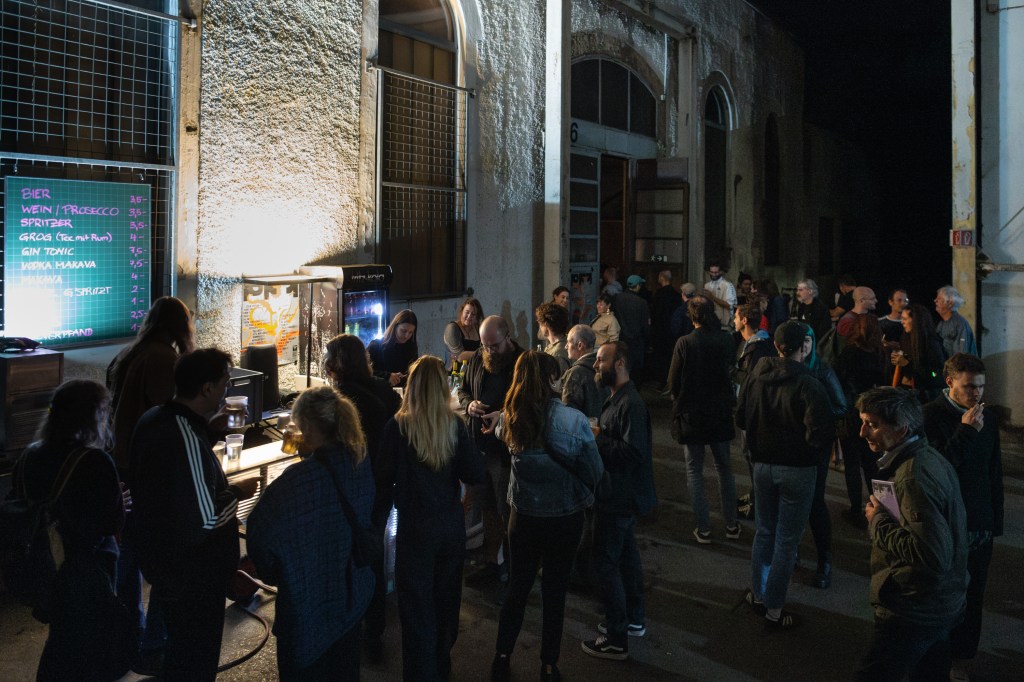
Giorgis Einladung nach Innsbruck war Teil einer dreiwöchigen Residency im Rahmen von „SLASH/Transition“, einem mehrjährigen Creative-Europe-/EU-Projekt, das die Rolle von Klangkünstler:innen in sich wandelnden städtischen Gebieten untersucht. Vorgeschlagen wurde der Künstler von Mutant Radio Tibilisi. Neben Lissabon, Nantes, Tbilisi und Tunis ist auch Innsbruck unter den fünf Partnerstädten mit der Organisation openspace.innsbruck vertreten, die es sich zum Ziel gesetzt hat, das Areal um St. Bartlmä, einer ehemaligen Industrieanlage, mittels Klangkunst zu erforschen: „Es ist für uns ein zentraler und essenzieller Ort des Wandels – sowohl aus der Perspektive der Nachbarschaft als auch der gesamten Stadtbevölkerung“, so Danijela Oberhofer Tonkovic, Projektleiterin von SLASH, die diesen Prozess, zusammen mit dem Mentor Chris Koubek, aktiv begleiten und unterstützen möchte. Gleichzeitig sei es eine inspirierende industrielle Stätte, die die pulsierende lebendige Energie Tbilisis in sich wiederspiegelt. Am selben Abend performte aber auch die aus Bad Ischl stammende Musikerin Ursula Winterauer alias Gischt, die im November im Rahmen von SLASH eine Residency bei der Partnerorganisation Trempo in Nantes verbringen wird.
Mit „SLASH/Transition“ werden Künstler:innen und Klangforscher:innen eingeladen, das Potenzial von Sound als erzählerisches Medium auszuschöpfen, das eine Vision jenseits bloßer Ästhetik verkörpert und Perspektivwechsel anregt. „Klangkünstler:innen und Musiker:innen besitzen die besondere Fähigkeit, Räume zu transformieren,“ sagt Oberhofer Tonkovic. Durch den experimentellen Umgang mit Klang entstehen Verbindungen zwischen Menschen und Räumen, die neue Perspektiven auf Orte im Wandel eröffnen. Giorgi Koberidze selbst ist für sein innovatives Zusammenspiel elektronischer und klassischer Musik bekannt, eine Praxis, die er am Staatlichen Konservatorium von Tiflis erforschte.
Sein Aufenthalt in Innsbruck wurde von Seiten der Organisator:innen sowohl auch des Künstlers als besonders bereichernd empfunden, da Giorgi durch die „fruchtbare Struktur und klare Orientierung“ der Residency in der Lage war, ein langfristig wirkendes Projekt zu entwickeln und gleichzeitig eine intensive Verbindung zur Innsbrucker Gemeinschaft aufzubauen. Seine Präsenz bereicherte nicht nur das Festivalpublikum, sondern schuf durch kulturellen Austausch auch eine Brücke zwischen dem georgischen Künstler und der Innsbrucker Szene, die wohl noch länger nachwirken wird.
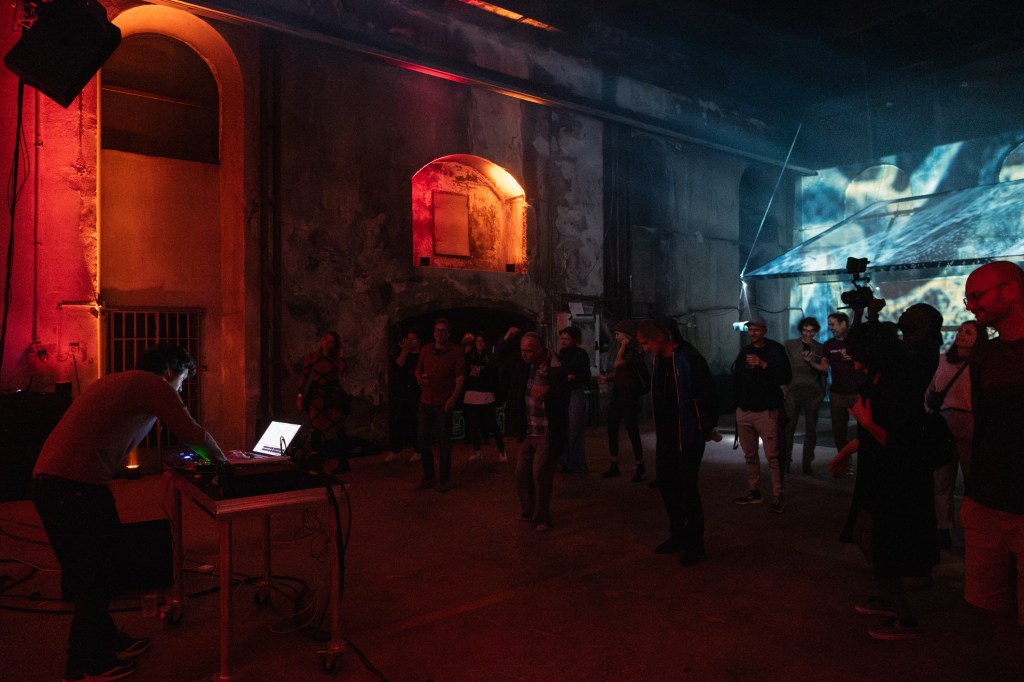
In unserem Interview spricht Giorgi Koberidze über seine Erfahrungen während der Residency, seinen künstlerischen Prozess und den Wert der Klangkunst in urbanen Umgebungen wie St. Bartlmä.
komplex: Your artistic research project within SLASH/TRANSITION focuses on the local environment of St. Bartlmä in Innsbruck. What was your first impression of this space, how did you experience it, and how did it shape your residency project?
Giorgi Koberidze: The choice of St. Bartlmä was excellent because the focus is on one specific area. In a large neighborhood I would feel a bit lost. Here, I could get to know St. Bartlmä deeply, meeting almost everyone who is involved there and I could learn firsthand about the community’s concerns and dynamics.
My first impression was that it’s a diverse space where many unique individuals gather. I wanted to connect with as many locals as possible, to use the place to its fullest. I didn’t want to be this person from abroad who doesn’t know anything and interferes, this would feel awkward.
How did you approach this collaborative engagement with the community?
I decided from the start that working closely with the community was essential. By the end, around ten people were directly involved in the project, and their participation was very meaningful. Having everyone involved meant I didn’t feel like I was intruding on their space but rather collaborating with them.
What was the experience of working in such a large team like for you?
It was an extraordinary experience as working with other people is rare for me – I’m used to working alone. The collaboration was surprisingly smooth; everyone was so professional. I also tried not to interfere in others‘ creative processes. For example, when collaborating with the painters, I didn’t direct how the artwork should look, I trusted the process and the people I worked with. This kind of mutual trust is crucial and isn’t always possible, but here it worked beautifully, even with the musicians who improvised their parts with professionalism.
Did this collaborative experience help you develop new skills for your practice?
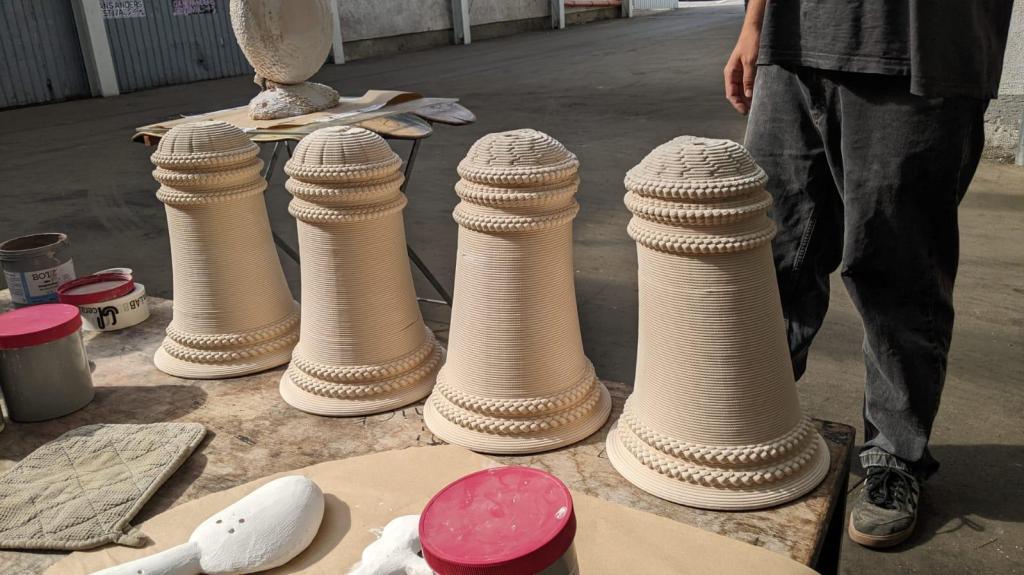
Absolutely. I learned a lot about the skill of communicating ideas to others. For me, it’s often challenging to explain what I envision to other artists or collaborators. In this project, I composed the music, and we recorded with four instrumentalists. We also had Ivona handling the visuals, Nikolina and Bertram painting the bells, Jan creating the bells with ceramic 3D printing, and Charly and his team building the construction. It took new skills to convey my ideas and coordinate all these roles.
In St. Bartlmä, you incorporated the historic Grassmayr bell foundry into your project, which is part of the neighborhood. What is it about bells that fascinates you?
The Grassmayr foundry was introduced to me by Danijela, who had already arranged everything and connected me with the owner. I knew immediately that I wanted to work with bells – as they also have a strong connection to Georgian tradition. In Georgian culture, bells are highly symbolic, studied not just as instruments but as objects central to the soundscapes of specific places. This interest was deepened by my teachers, who had explored these traditions for years. In Georgia, bells are also considered to have protective properties, believed to cleanse the space around them. They can clear away negative energies and protect spaces, a belief that is also getting more popular in modern sound healing practices, though, I’m not sure it is scientifically proofed that they are actually able to neutralize harmful microbes.
I was excited to see how bells could fit into my work in Innsbruck and felt inspired by the sound and symbolism they bring.
Does this concept of sound healing interest you personally?
It does, though I haven’t fully explored it. Unfortunately, there is not enough time in this life for everything that interests me. Sound healing is something I’d love to experiment with one day – the second thing is experimenting with chocolate. But it would need another lifetime to go to India or France for some years and study how to become a chocolatier… one of my biggest dreams which will never happen.
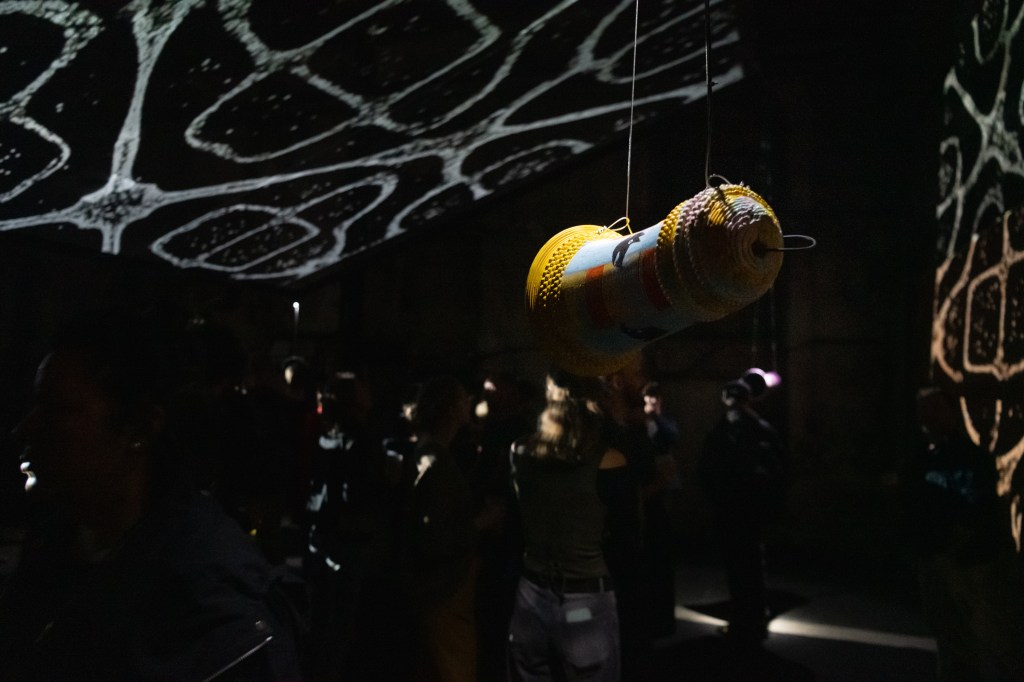
How did you incorporate the sound of bells into your installation? You mentioned four bells, each representing a theme – could you explain this?
Yes, the idea emerged to use four bells, each representing a specific element that’s often at risk in times of transition. I thought about St. Bartlmä and some old neighborhoods in Tbilisi, which are also experiencing rapid changes and gentrification. The four elements I chose to symbolize through the bells were: nature (which is often the first to be threatened by urban changes), human impacts or errors, traditions, and art (reflecting the vulnerable position of artists in transitional spaces). Each bell was dedicated to one of these elements, creating a form of symbolic protection over them.
Could you say more about how you integrated elements of Georgian tradition in your composition?
For this composition I used a Georgian microtonal tuning system, which is a traditional Georgian tuning that wasn’t widely recognized until recently. This system was mostly used by village musicians until a Georgian musician formalized it through research.
How do you plan to continue this project?
The project is still in development. We are planning to publish the composition as a vinyl record. This will serve as lasting documentation of the residency. Because St. Bartlmä is a private space with short contracts, it’s uncertain what will happen to the space in the future. That’s why it wouldn’t make sense to create an installation or something that stays physically in the space. But the vinyl record gives the project a permanent form.
In your opinion, would a recording of bells have the same healing impact, or do the bells need to be physically present in the space?
I’m not sure a recording would have the same effect. The ability to record sound is relatively new, and for most of history, every sound existed only in the moment it was produced. Recorded sound is always a copy, and I doubt it can capture all the qualities of a live sound. They for sure do have their own unique value though.
Why do you make music at all?
There’s a saying that my teacher often quoted: a musician is someone who cannot not make music Sometimes this also makes me feel lost, because sometimes I would really love to have a specific reason behind it. But for me, it mostly feels like music is something I have to do rather than something I choose to do.
| Brigitte Egger
Weiterführender Link
„slash transition“ im openspace.innsbruck – Sendung „FREIFENSTER“ mit Hermann Leitner im FREIRAD – Freies Radio Innsbruck
 komplex-KULTURMAGAZIN
2 Gedanken zu “From Tibilisi to St. Bartlmä – Sound Artist GIORGI KOBERIDZE about his residency in Innsbruck”