
Mit dem Wahnsinn an der Hand und im Unterbauch spazieren wir in die letzte komPOST-Ausgabe des Jahres hinein: #50. Es begleiten uns Malereien von Gergő Bánkúti und ein Text von Helena Vranka.
/ With madness by the hand and in our guts, we wander into the last issue of komPOST for the year: #50. Accompanied by paintings by Gergő Bánkúti and a text by Helena Vranka.
the devil has turned up in Vizslás
Gergő Bánkúti, 2025
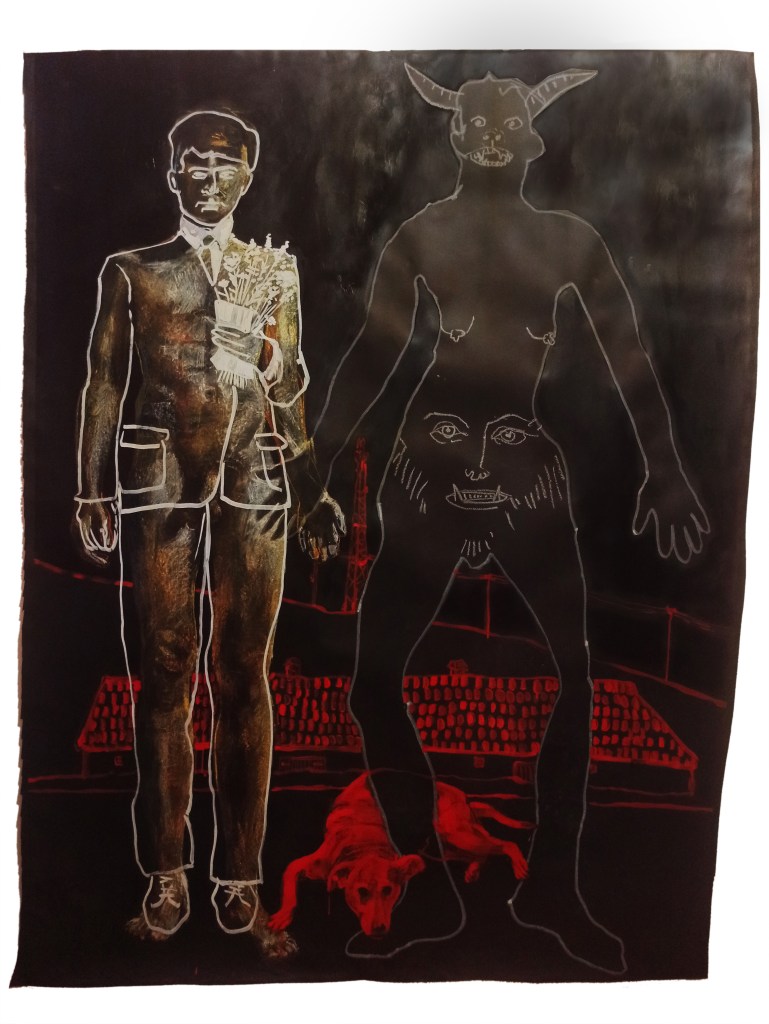
Eine Regung
Helena Vranka, 2025
Ich sehe etwas schweben
über meinen glühenden Gitterpressen
die Rebstäbe gestaucht
und der Wahnsinn im Unterbauch
Ich sehe etwas schweben
über dem Mahnmal, über dem Hain
eine vielzackige Unmut
sich selbst aufreißen
im Begriff etwas zu begreifen
blindsein, schwarz
um sich tasten
Es hagelt weiche Wesen auf uns nieder
die Bedeutsamkeit des Rebhuhns
wahlweise angestochen
Innehaltend im Wimpernschlag
den Vogel betrachten, das Federwerk
käferschillernd im Wiegenlicht
man stelle seine Prächtigkeit
subkonszient gar entschieden fest
Das Weidenkatzerl im Handversteck
die Faust ganz Fest, das weiche Wesen
dröhnend, es drückt wie ein Nagel in die Handhaut hinein
Es sticht!
während eine langwierige Überlegung
gebeugt vorgenommen
und über fließendem Wasser
das Weidenkatzerl faucht um seine Freiheit
beißt sich durch die Hautfalten
hörst du wohl den Buben auf die Tasten hauen
hört es wohl?
begleitend seinem Vorhaben
der letzte Akt soll Hageln sein
Abandoned, bare, all alone
Gergő Bánkúti, 2025
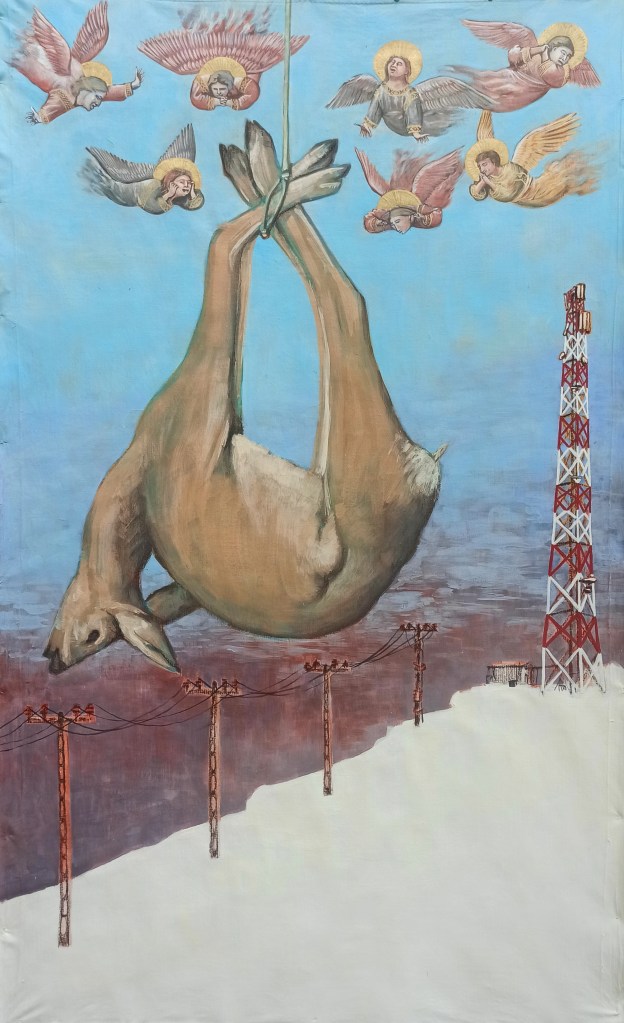
the stork has taken (him) away
Gergő Bánkúti, 2025


The komPOST series presents monthly artistic submissions in a wide variety of media. The works are selected and combined by the editorial team of komplex–KULTURMAGAZIN. If you also want to be part of komPOST, read our open call and submit your works.
Bios
Helena Vranka
Studentin aus Wien, wird von der Lyrik in vagen Geistesblitzen heimgesucht
Gergő Bánkúti
Gergő Bánkúti takes on the role of the reminiscer; the feelings and experiences of the child within him are evoked by the absence and loss of a loved one. An era is coming to an end. An era is coming to an end in a broader sense, the world around us is changing at an adverse speed, including the lives of the villagers and village itself, where Bánkúti comes from. The motif of unconscious or involuntary remembrance and conscious retrospective are simultaneously present in his works. He enters into the dialogue of forgetting and remembering when he beautifies, ennobles, and uplifts objects and memories that are doomed to destruction and perhaps not even worth preserving. For Bánkúti, evocation of memory is at once a work of mourning, an introspection, and an artistic rite that is able to bring the lost father and grandmother back to life from the stream of memories.
 komplex-KULTURMAGAZIN
Ein Gedanke zu “komPOST #50 [G. Bánkúti, H. Vranka]”