
Transitioning from an urban creative hub to a quiet mountain landscape often alters more than just an artist’s physical routine; it recalibrates their internal rhythm. In August 2026, Vienna-based artists Oskerhase and Funky Fiona were invited to GRUND1535 in Rietz for an artist residency connected to the pre-event of the music video award and festival Die Goldene Schindel on Oct 2nd. During their stay, they explored the surroundings of GRUND1535 and worked with organic found objects and other materials collected in the nearby forest, along the river Inn, and around the house itself.
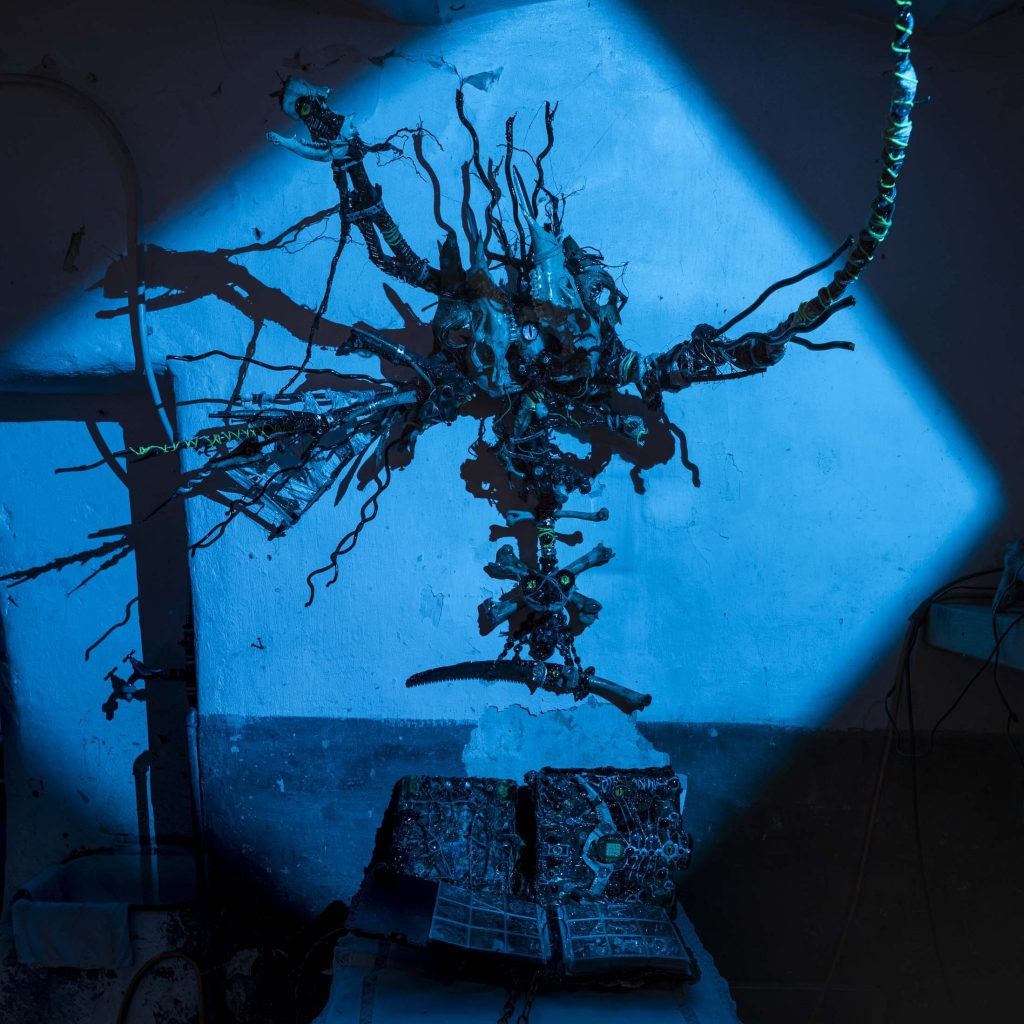
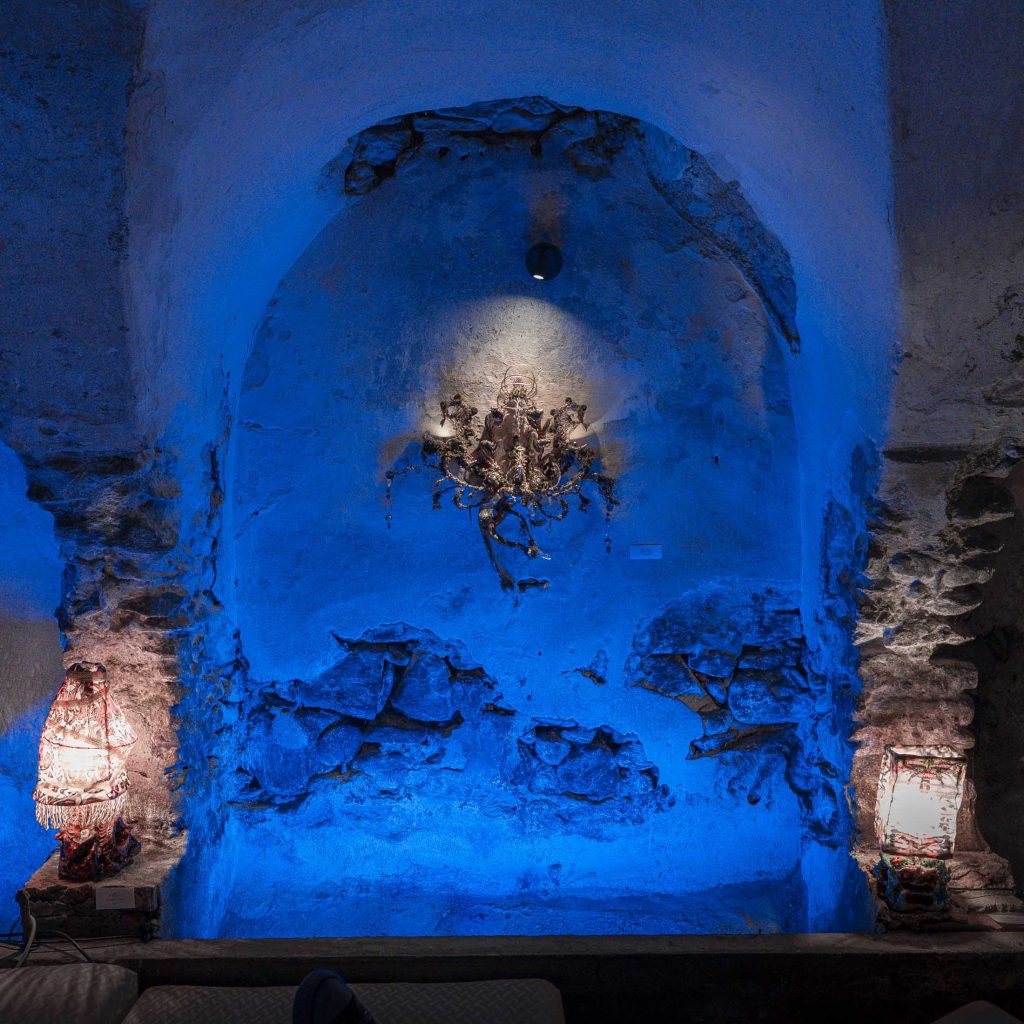
The residency resulted in fantastic, surreal creatures and ornamental sculptures, opening up spaces for new worlds and stories. Oskerhase also created a music video during the residency, using sounds recorded in and around GRUND1535 and visual material resulting from artistic objects he created on site, as well as footage they shot in the surrounding area while searching for materials. Their works grew directly out of the local environment, transforming materials that might otherwise be overlooked or discarded into new forms and characters, and giving them a new value through the artistic process.
Following their residency, Oskerhase and Funky Fiona sat down to discuss how shifting environments shape their multi-sensory practices, the friction and beauty of co-creation, their relationship with found materials and the process of working in and with a new environment.
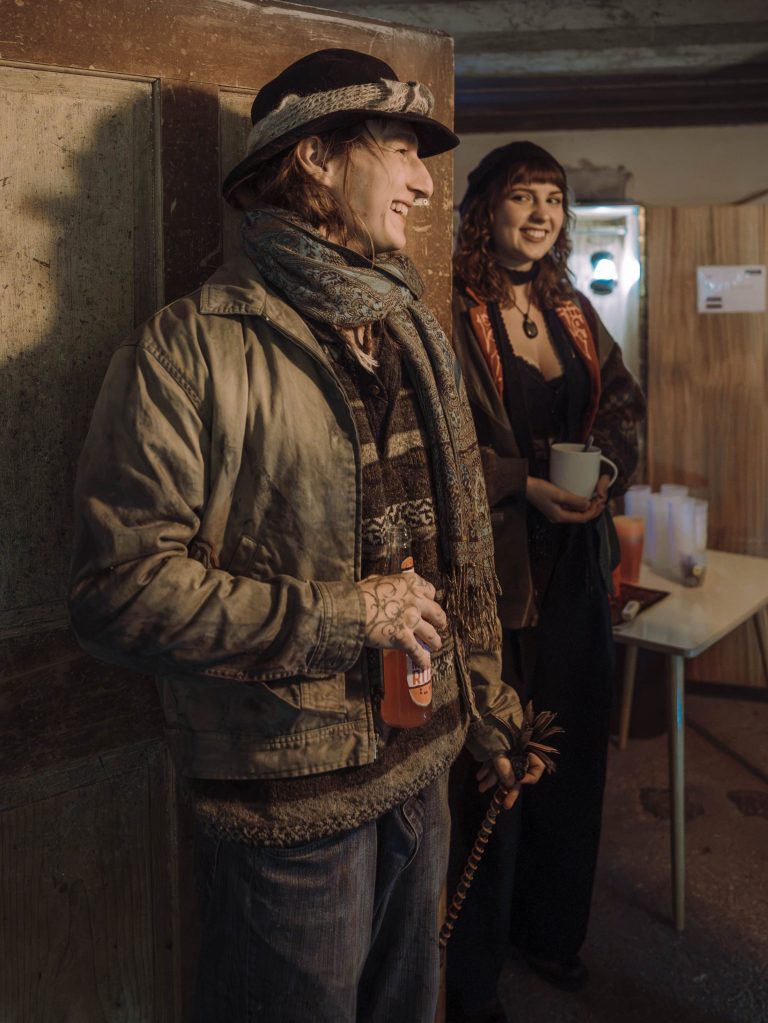
Raya Sotirova: Coming from Vienna’s urban creative pulse, how did the change of scale, light, and scenery in Tyrol alter your daily creative rhythms?
Funky Fiona: To me, it felt very flowy. At first, I felt pressure to finish the work, but everything worked out. Tyrol gave me confidence to trust the process without forcing things. It felt a bit like home: a mix of where my parents live and where my grandmother lived, so I felt very at peace. Though I definitely need sun to work; when there’s no sun, it feels almost impossible to find energy.
Oskerhase: I actually love working in the evening and at night. In Tyrol, it was so silent once night fell. Most of the day’s tasks were done, so I could just focus completely on one creation until I got tired. Doing stop-motion late at night in the countryside silence was really special.
Did specific Tyrolean elements like landscape, local materials, folklore, or isolation, infiltrate your visual language or colour choices in ways you didn’t anticipate?
Oskar: One of my main pieces ended up mostly in red and white, which unintentionally gave off very Tyrolean and Austrian traditional vibes. I also took a field recorder everywhere. I recorded the creak of the old barn door, sounds around the house, playing the harmonica, and walking through the countryside.
Fiona: For me, the moss in Tyrol was incredible. Completely different from Vienna. In Vienna, moss is very dry and doesn’t grow as nicely, but the mountain moss is so vibrant. Even the joint piece we worked on beforehand uses moss and accessories collected directly in Tyrol, so the connection to the residency runs through the entire setup.
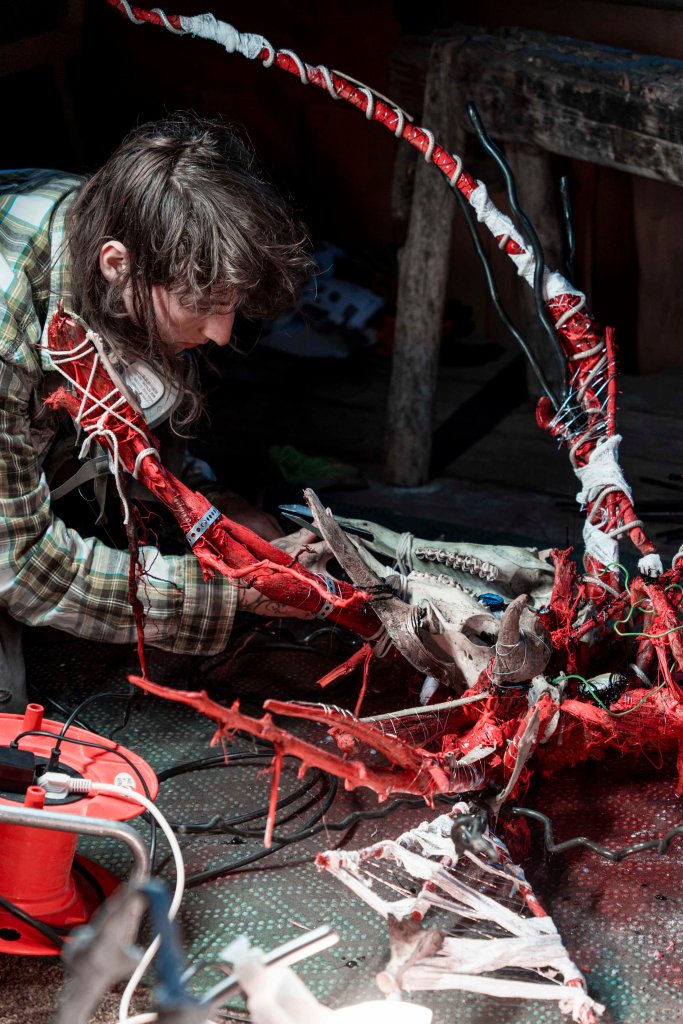
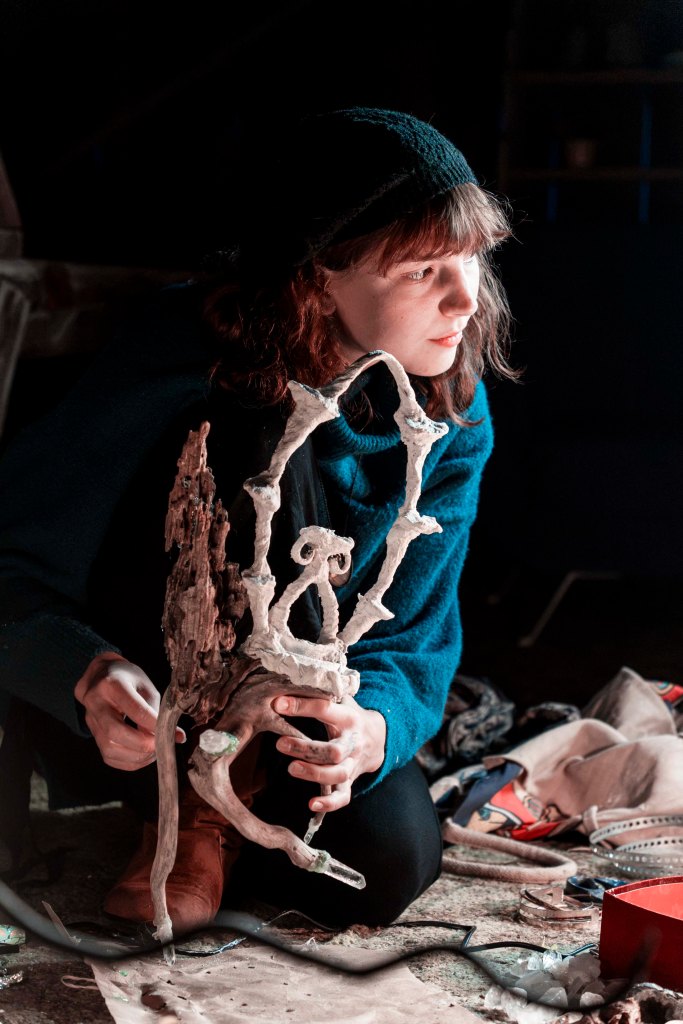
As two distinct artists sharing space during a residency, how did your processes influence or challenge each other?
Fiona: Oskar’s style is very intense, catchy, and fast-paced. I often feel like I work much slower compared to him. His process looks chaotic from the outside, but in his head, it’s perfectly organised, and everything clicks together.
Oskar: For me, it’s purely about fun and letting the artwork happen organically rather than forcing it. But working together on the same piece definitely taught us a lot about each other.
Did you work on individual pieces in parallel, or did the residency spark direct collaborative works?
We started with separate works, but we also continued working on a major collaborative piece that we had begun before coming to Tyrol.
Fiona: That collaboration was very interesting for our relationship. Because we sometimes worked on it at separate times, I would layer materials over parts Osker had done. At one point, I accidentally covered parts he really liked because I was trying to figure out how to put my own style onto it. It was emotionally intense to navigate taking space while respecting each other’s work, but we learned how to communicate much better through it.
Oskar: In the end, I was really happy with how it turned out. The layering created something completely new that neither of us would have made on our own.
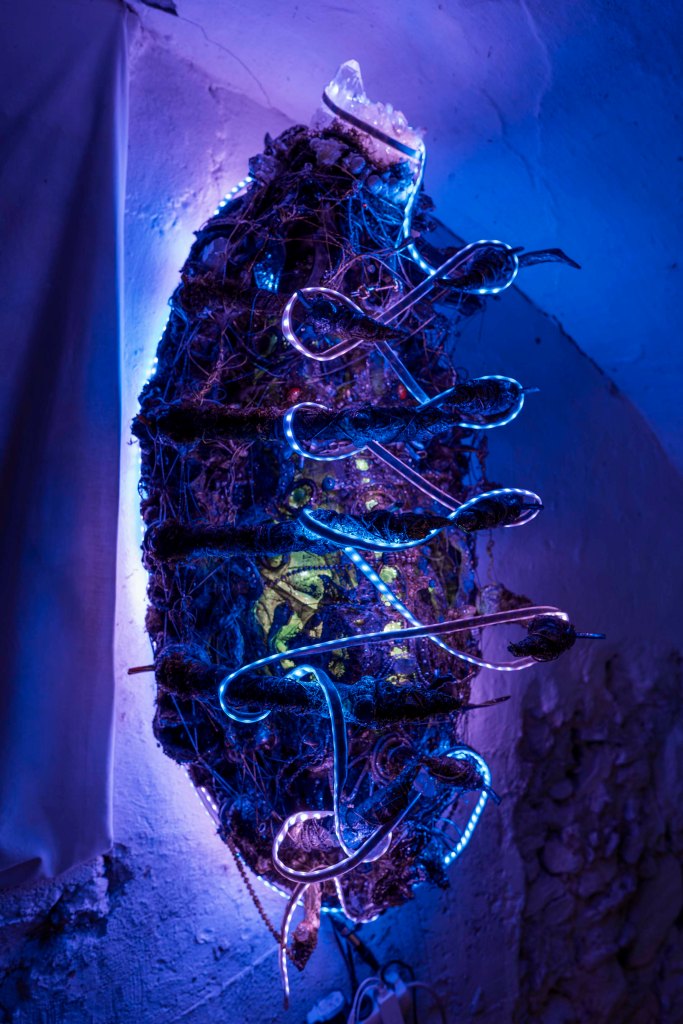
Did you test new techniques, scales, or mediums in Tyrol that you usually wouldn’t try?
Oskar: Creating the stop-motion video was completely new for me. One evening, I set up my sculpture on the barn wall, taped my phone to keep it still, and spent hours moving around the room rearranging random found objects, taking a frame, moving another piece, and repeating. Producing an audio track composed of recorded ambient surroundings was also a new avenue for me.
Fiona: I experimented more with wirework and using synthetic resin as a protective top layer on my sculptures, which subtly shifted the colours underneath.
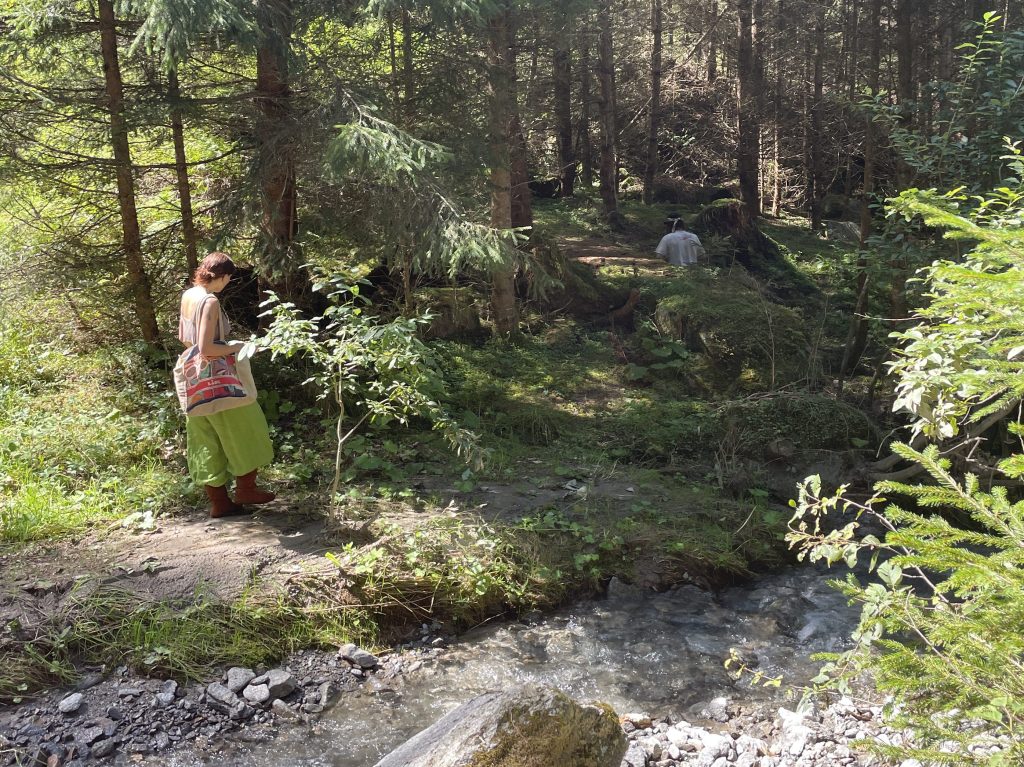
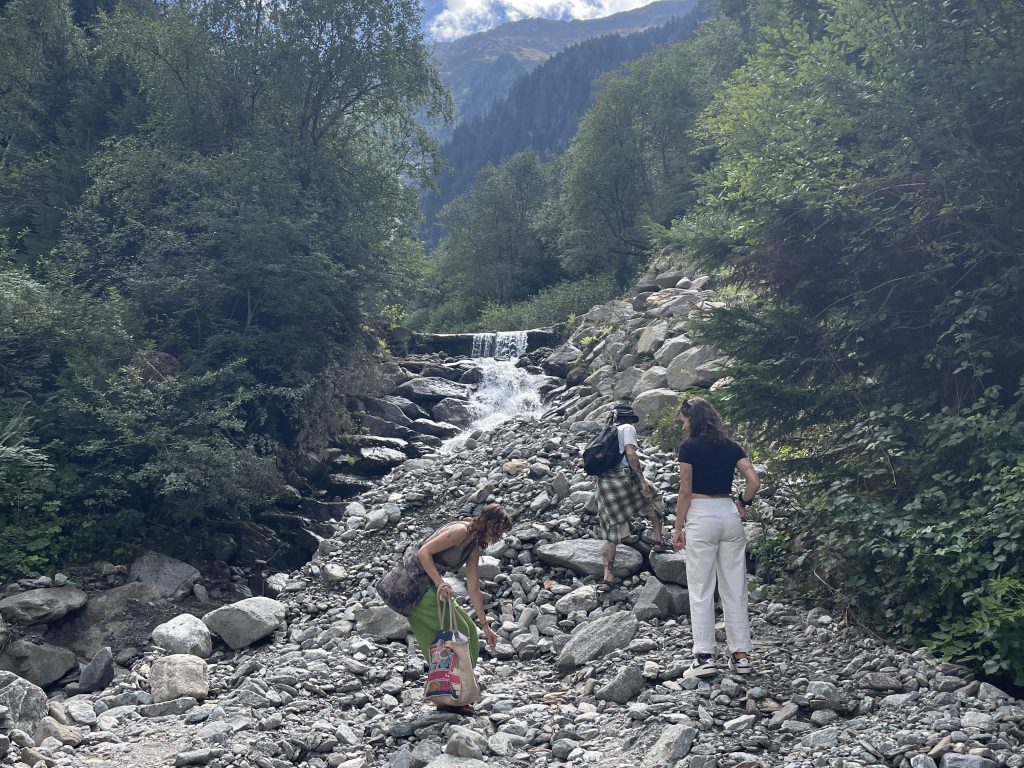
During the stay there, a hike in the forest mountain was just as natural as Did you go on forest hikes with specific concepts in mind, or was the collection process entirely spontaneous?
Fiona: Absolutely no plan. I just pick up what I find beautiful. Near the waterfall, we found stones that were so shiny and golden. When collecting wood, I always look for knots that look like eyes or faces.
Oskar: Completely spontaneous for me, too. I was hoping to find bones because I really like working with them, and we did find some. But I never know how I’m going to use an object until the moment I’m actually crafting. A lot of our sculpture work comes from taking smaller found items, even old childhood Lego pieces, glueing them together, and spray-painting them into entirely new forms.
How are you translating the raw energy and context of Tyrol into the gallery space for this exhibition?
Oskar: In addition to our individual wall sculptures and our joint piece, I’ll be featuring the music video and playing the ambient audio track we tested in the cellar sound system. The exhibition serves as the preview for the video and track before they hit YouTube and SoundCloud.
What do you hope visitors experience when stepping into this exhibition?
Fiona: I love seeing how people react because they often see things in the work that I didn’t even notice myself. Some people find the works intense or even a bit scary, but that reflection of their inner world is what makes art fascinating.
Oskar: We want people to engage with the intensity and the tactile quality of the creations. It’s about letting go, having fun, and seeing how repurposed elements can form a brand-new narrative.
The morning air in Tyrol carried that crisp, pine-scented sharpness that instantly clears your mind, but it was the quiet anticipation of the days ahead that truly set the tone for the residency. Setting out onto the mountain trails alongside Fiona and Oskar, the hikes through the raw, untamed Tyrolean alpine landscape quickly became more than just physical treks. They turned into a mobile studio where nature served as both sanctuary and active catalyst for their upcoming exhibition. Looking beyond the exhibition space, Oskar and Fiona are upgrading their workspace in Burgenland to remain winter-proof for ongoing winter projects.
On January 22–23, the duo will collaborate to design the stage installation and visual environment for a two-day music festival by Dazed and Confused Shows in Vienna, where Oskar will also perform a closing DJ set.
| Raya Sotirova

