
Since 2013, the IFFI has hosted the Film Campus Innsbruck — a programme that invites young filmmakers to Innsbruck to partake in workshops, talks and encounters with industry experts while immersing themselves in the atmosphere of the festival. In 2023, the film campus partnered up with the DIAMETRALE to expand the program. This year, marking the 10th anniversary of the DIAMTETRALE, we joined the ten participants to gain insight into this exciting programme that turns Innsbruck into a temporary home of emerging filmmakers with big ideas.
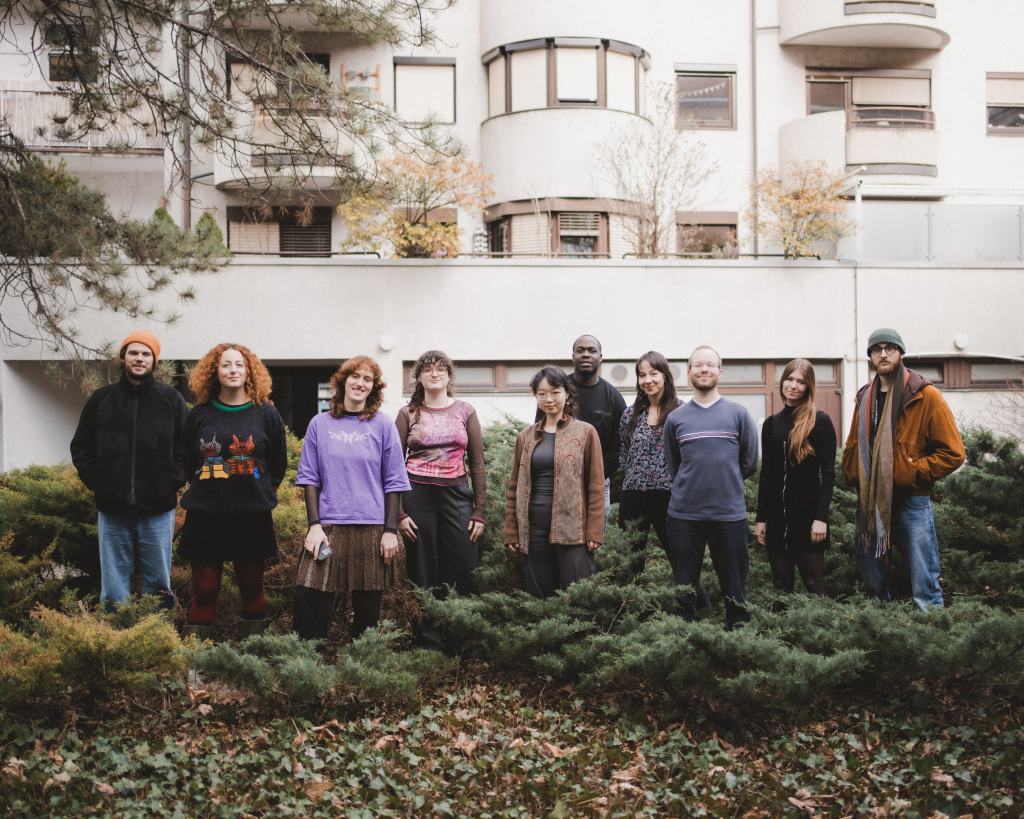
Over three days five experts shed light on the often nebulous path of making a movie. On that note, Voxi Bärenklau kicked things off with a workshop on lighting and how it can be used quickly and effectively, even on a low budget film set. Robert Mayr from Fimlicht Innsbruck supported the practical exercises and later invited us to come to his shop the next morning. Over great coffee he showed us his world of lamps, filters and DIY tools he built to move his gear around the set fast, no matter the terrain.
Later that day, the participants pitched their projects to Marija Milovanovic, head of Lemonade Film, a festival distribution company for short films and local filmmaker Lukas Ladner. What stood out most was the vast diversity of their projects — from saving seagulls to intergalactic explorations of body movement through dance. “It was wonderful to be in an environment of collectivity and creative synergy.” said Asia Miralli who presented her concept for an experimental short film about recruiting passengers for an imaginary ship on Google Maps. Following the pitches, each project received valuable input on possible festival strategies as well as dramaturgical feedback.
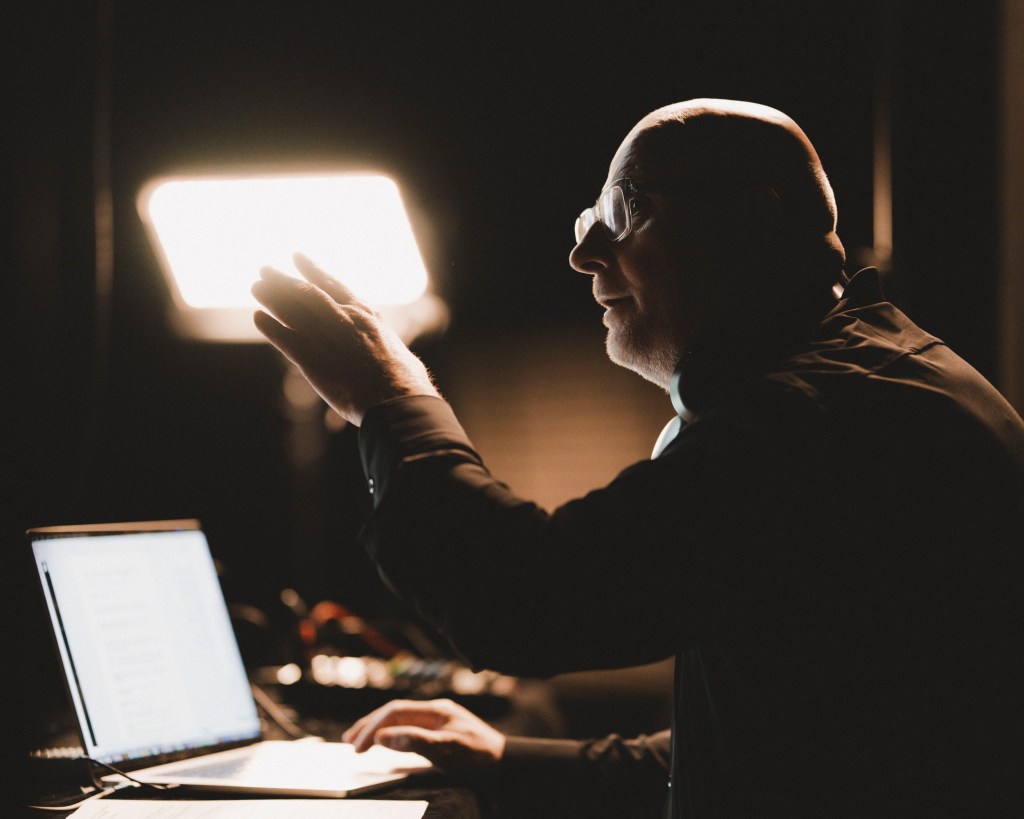
While I unfortunately missed the workshop by Michael Gülzow on experimental cinematic storytelling with found footage I was deeply impressed by Tizza Covi’s talk. By retelling her own path in filmmaking she opened up her perspectives on the relationship between filmmaker and protagonist and explored the blurred lines between fiction and documentary.
While the workshops and talks were inspiring and equipped the talents with practical insights, it was the community that emerged between them in this short amount of time that felt truly special. A connection fueled by an open minded exchange of ideas and speculations about the exciting journeys they could set off. And I believe that this is where the essence of the Diametrale shone through. After all, doesn’t every idea start out as useless and beautiful? But as soon as they are shared it might be the closest thing to collective dreaming.
With this in mind, we asked some of the participating filmmakers and experts how they relate to the idea of the useless and beautiful and if there is any piece of art or film that embodies that notion for them.
Lorenzo Lemmo
The first thing that comes to my mind is Taste of Cherry by Abbas Kiarostami. Although there may be other movies or art pieces that can embody the motto, I genuinely think that this film is in its both softness and melancholy a perfect example. In my own way of looking at life, not everything has to make sense. Sometimes things happen and it is more the trouble of finding some meaning rather than accepting and going forward. My idea probably shifts from the original essence of the movie but when I watched it for the first time I couldn’t see anything but the hidden beauty, the one that isn’t always at the center of the frame. There’s so much more happening in the background of our lives that sometimes I remember it doesn’t necessarily have to make sense. I find myself more and more into embracing this as I grow, and I’m sure it is difficult to look at life knowing that there’s the possibility I’ll never find the answer I’m seeking for. But when I stop searching, beauty surrounds me.
Marija Milovanovic
It is a vast question — one that could easily unfold into an entire thesis. One might argue that art is often considered “useless,” as it serves no immediate function. And yet, it shows that beauty, atmosphere, and emotional resonance can be meaningful in themselves.
I would hesitate to call any work of art truly useless. Rather, “useless and beautiful” describes works that are visually striking and carefully crafted, yet unconcerned with being practical or didactic. Their value lies entirely in their aesthetic, their mood, and the emotions they evoke — which is precisely what makes them meaningful.
Because art always carries meaning. If not for a broad audience, then at least for the artist who created it. There is always a motivation behind it — personal, creative, or even economic — and in that intention, its significance resides.
Hanna Kortus
For me, “useless and beautiful” is perfectly embodied by the movie Fucktoys by Annapurna Sriram (shown at Diametrale). I would definitely count it among my new favorites, it creates such a rich, queer worldbuilding, I really love it.
Yuwen Huang
For me, “useless and beautiful” is something very idealistic, maybe even a bit luxurious. We don’t need films to survive. We need oxygen, water, food, things like that. No one needs cinema in a practical sense.
Making films is also full of trouble. It takes time, money, energy, and creates many problems. Doing nothing would be much easier. But then there would also be much less joy.
I will always admire people who insist on doing these “useless” things, and those who create works that are useless and beautiful. Diametrale, in choosing to present all of this, is undoubtedly sincere and brave. In this sense, Diametrale felt like an idealistic utopia to me.
Voxi Bärenklau
This immediately brings to mind Christoph Schlingensief’s latest production, MEA CULPA, at the Burgtheater. Since his advanced cancer left him with hardly any time left for his usual aimless — though always amusing — experimentation with his endless ideas, he was very focused and quick in his decisions this time around. And lo and behold, for the first time, he suddenly did something dramaturgically that he had never done before — and that we had NEVER done, at least in the early days of his feature film production phase: He used a classic hyperbolic narrative arc, with exposition, climax, and resolution, and he rehearsed very little, as he barely had any strength left. At first, I had always argued with him, but during his stage productions, we worked peacefully side by side, and each of us did our work creatively in the spirit of our mutual teacher, the experimental filmmaker Werner Nekes. I accepted that it wouldn’t be typical Schlingensief work if he were to listen to me, which he never did, except for MEA CULPA. That surprised me greatly, and as always, it was “useless BUT beautiful.”
Asia Miralli
If I think about my experience as an audiovisual viewer over the past few months, two extremely different films come to mind, yet equally useless and beautiful: Wuthering Heights (2026) (did we need it??? no! Was it still nice to watch? yes…) and Bravo Bene! by Mario Moresco (that’s an Italian mockumentary that embodies this motto perfectly).
| Johanna Hinterholzer

