
What do we lose when a generation’s stories fade away? For Linz-born filmmaker Judith Brenneis, that question became the catalyst for her intimate directorial debut, “Oma, was hast du dir erträumt?” (Grandma, what did you dream of?) The resulting 13-minute short film is a poetic, visual contrast between two lifetimes.
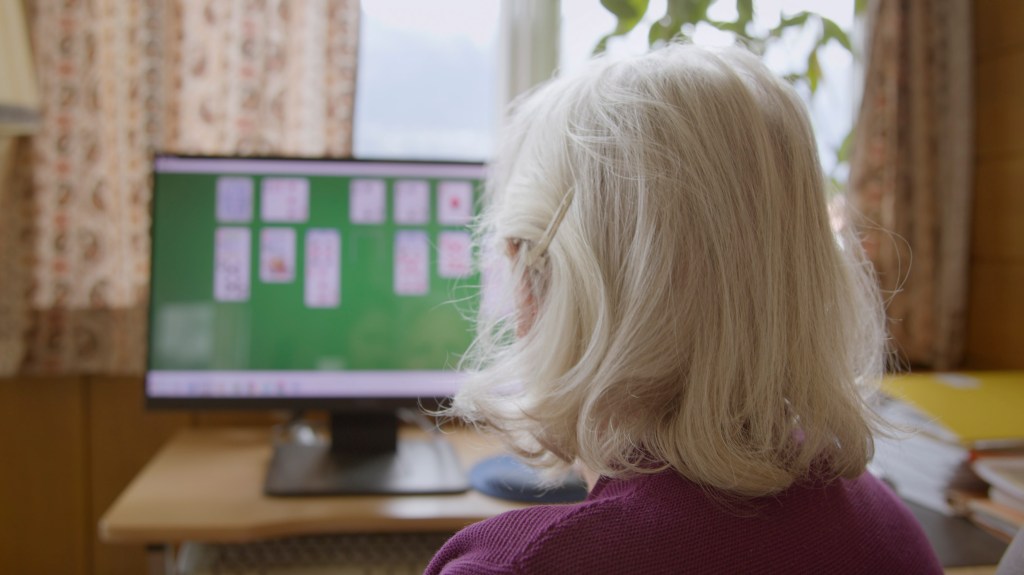
By interviewing two elderly women – one raising a family in the rural landscapes of Upper Austria and the other navigating city life in Tyrol, Brenneis captures the systemic, rigid limitations placed on women born in the 1923 and 1938 eras. Fresh off a successful festival run at Crossing Europe, Judith discusses the weight of preserving personal history, the transition from technical crew to the director’s chair, and why the ultimate filmmaking rule is learning to let go of perfectionism.
Raya Sotirova: What was the initial spark that made you want to tell this specific story, and how much of it was inspired by your own family history?
Judith Brenneis: There were two parts to the spark. First of all, it’s about these two old women, their lives, and the dreams, hopes, and wishes they had. One of the women is the grandmother of a friend of mine. It started when my friend asked me if I wanted to record her grandmother’s stories so they wouldn’t get lost. I became very interested, and then I realised I also wanted to preserve what my own grandmother had to tell. It’s always fascinating to see how different life was back then.
Once I had these two people, it was very important to find a connection or a general theme, because I didn’t want to just ask them, „What do you have to tell me about your life?“ Then I found these distinct differences between them: one grew up in the countryside, wasn’t able to get a proper education, and stayed there her entire life. The other moved to the city, and she had a family for whom she needed to get an education and a proper job. Because of that, their two lives were very different, and that contrast became a core part of the movie.
You juxtapose city life in Tyrol with rural life in Upper Austria. Visually, how did you use these distinct landscapes to reflect the internal worlds and limited choices of these two women?
You see it just by the way the environments look. One is a proper Austrian farmhouse with a garden and outdoor space, featuring a kitchen style typical of farmhouses back in the day. The other is a flat in the city. It’s on a higher floor, so when you look outside the window, you realise it’s not on the ground floor. I also shot in front of the buildings: for the city flat, you see the street with cars moving before it, and almost the rest of her segment is shot strictly inside. For the farmhouse, I was able to film a lot of material outside.
Since you handled basically everything yourself: production, cinematography, design – was it freeing to just be fully in charge, or did you have to constantly compromise between your „director brain“ and your „camera brain“?
It was really nice being the only one in charge. I could seamlessly combine the visual ideas I had with the general structure of the movie. It made editing easier, too, because there was no one else I had to compromise with.
It was also special because it was personal, since one of the two women was my grandmother and the other was a friend’s grandmother. I could bring my specific interests to the project. They told me a lot more than what actually made it into the final film. The idea of focusing on the differences between the city and the countryside, and getting an education versus not getting one, is entirely connected to what was possible for a woman back then. It was very important to me to bring a feminist touch to it, looking at their reality from my perspective as a young woman today.
I guess it puts into perspective the massive privilege we have as modern women.
Definitely. I realised how much easier it was for me to get an education, to travel, and to make life choices without needing to ask anyone for permission.
Do they realise how much they lost, or did they have a moment of realisation while filming?
I wouldn’t say they feel like they lost something. They certainly reflect on the fact that young people today have vastly more opportunities, but they didn’t say it with sadness. They accepted that it was just the reality of their era, and they couldn’t change it. They’ve made peace with how their lives turned out, which was beautiful to witness.
How did they react after seeing the final movie put together?
In very different ways! One was very happy, loved participating, and was very much into it. The other was a little bit shy and worried, asking, „Oh, what will other people think when they see me on the screen?“ But in the end, both of them liked the outcome and felt it was a nice movie.
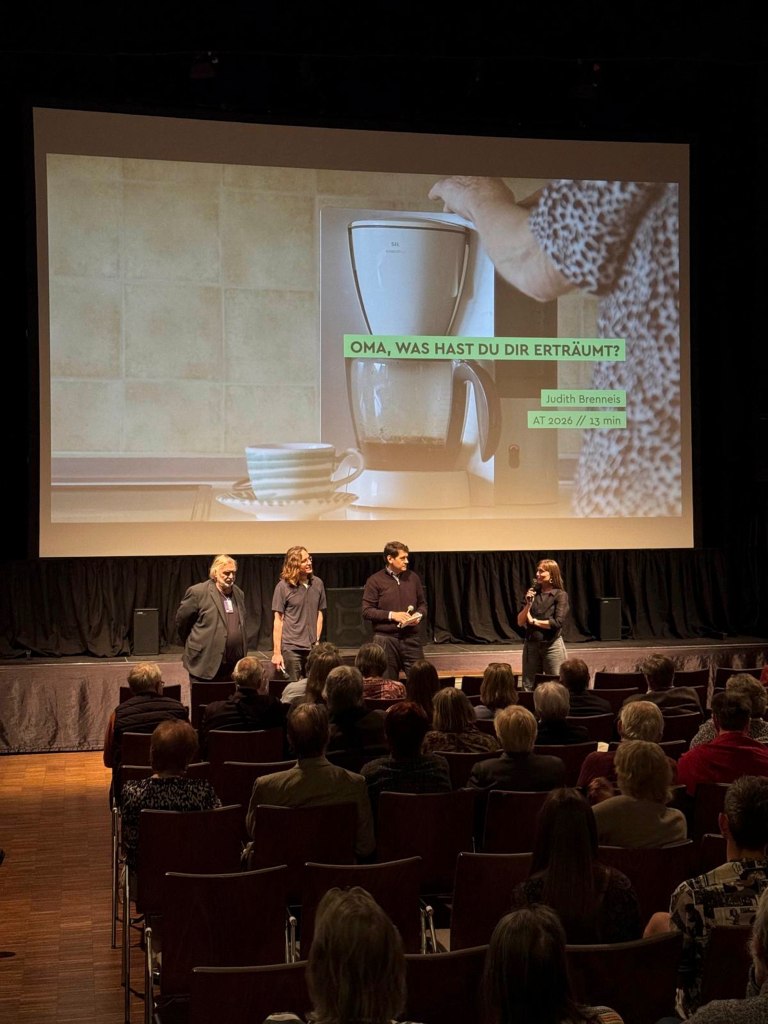
What about the general reaction from the audience at the premiere screening?
In general, the feedback was very positive. It was interesting because there were a lot of elderly people in the screening, as other films were shown in the same program. Afterwards, several elderly women came up to me and said, „Oh, it reminds me so much of my own life. I had similar experiences, and it’s nice to see that on screen.“ I also showed it to colleagues and friends from completely different countries and cultures, and one told me it reminded her so much of her own grandmother, even though they grew up in a completely different part of the world. Life was just very similar for that generation.
As your directorial debut, what surprised you most about stepping into the director’s chair compared to your usual territory on the camera crew?
I would say you put a lot more of your creative side into it. When you’re in the camera department, you only focus on the visual side. As a director, you have to think about how people will react when they see the movie, how to make it interesting, how to make it a little bit funny, or how to tell a story that perhaps not everyone knows. That’s a massive part of a director’s job.
You participated in the Film Campus Innsbruck, where you mentioned the value of having diverse mentors from different cultural backgrounds. How did those varied filmmaking traditions shape your approach to making this film?
I always think it’s wonderful to have mentors and attend workshops because you can always extract something valuable from other people’s experiences for your own work. On this movie, I had people helping me develop the initial concept and idea. That was vital and very useful, especially in documentary filmmaking, because you get feedback from someone who isn’t personally attached to the topic or the protagonists. I just love hearing different approaches to filmmaking and seeing how people put things together.
From working as a camera assistant in high-energy indie music videos like BIBIZA’s Stadtpark Insomnia to fast-paced commercial shoots like Vienna Bites, what are the biggest lessons you’ve learned about teamwork, organisation, and cinematography that you now bring to your own independent filmmaking?
The biggest lesson I take back to my own work is the organisational side – realising how crucial it is to plan your shoot, lay out your must-have shots, and know what you can skip if you run out of time. I also learned that filmmaking is pure teamwork. You are only as good as your team.
It’s great to observe how other directors and DoPs plan and execute their shots. Whenever I get the chance, I ask them why they chose to do a shot a specific way. You have a bit more freedom to do that on smaller indie productions and music videos compared to commercial shoots. Commercials have a completely different vibe because they are incredibly fast-paced. It’s a paid job with a strict schedule; if you don’t stick to it, things get expensive. Music videos often have no budget or are unpaid, so they can be a bit more chill.
On a visual level, I learned a lot about cinematography just by observing where people put lights, how they manage camera movement, and by studying their shot lists.
You are a part of Kameraschwestern (an Austrian network for camera crews). How important are initiatives like this for changing the landscape of the camera department?
It’s a completely different side of what I do. It’s a Berufsverband, an association for people working in the same profession. It was actually founded just last year for camera assistants. It’s an official group where you get to know people doing the same job, but it also deals with the legal side of the work, like contracts, wages, and financial things.
I think it’s incredibly important to have these groups for exchange. Getting to know people who do or want to do the same things keeps you motivated.
Does having that technical background as an assistant help you manage a crew better now that you are the director?
Yes, absolutely, that is a massive factor. If you hold a leading position but have previously worked in an assistant role, you understand exactly what it takes to get the job done. You understand why a certain setup takes five minutes or why the director is currently waiting on the crew. People who have climbed the ranks are often much more patient and understanding because they know the mechanics of the set. I think it’s highly beneficial for any leader to start from the bottom.
The film is only 13 minutes, which is a tight window to capture two lifetime retrospectives. As the editor, how did you find the right pacing?
I wanted it to be a short film. I intentionally chose to focus on one specific topic: what it meant to be a woman, their dreams, and their opportunities. If a film is that short, you cannot touch upon multiple massive themes.
A lot of the pacing happened organically during the edit. In the beginning, the timeline was much longer. But someone in a workshop once gave me the classic advice: „Kill your darlings.“ Sometimes you desperately want to hold onto a sentence or a shot, but taking it out makes the overall movie better. Length doesn’t equal quality. It has to work with the Roter Faden (the red thread) – the narrative line that takes the audience from the beginning, builds tension in the middle, and drops it at the end.
How do you actually manage to cut down two hours of personal interviews?
First, I removed entire topics that felt like they belonged to a completely different story. Then I cut out elements that felt too massive or too emotional to tackle fairly in just a two-minute window. After that, I looked for overlapping themes – where they talked about the explicit differences or where their experiences mirrored each other.
To do this, I transcribed all the interviews, printed them out, and literally cut the paper into physical text blocks whenever a new topic started. I mapped it out in a completely analogue way, moving pieces around on a table. My first edit was still too long and repetitive, so I took out a million more sentences. At 13 minutes, it felt like the perfect mixture of humour, depth, and heavy reality to get my point across.
Do you see yourself continuing down a dual path of directing and cinematography, or has this film sparked a desire to focus purely on writing and directing future projects?
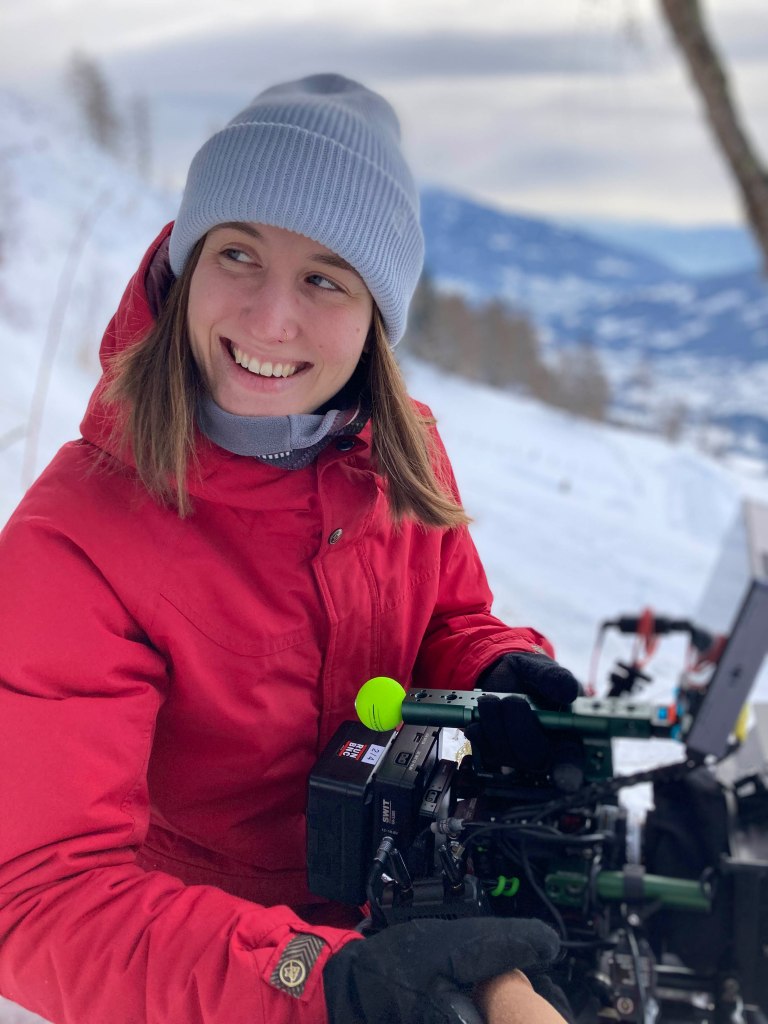
No, I’ve realised that the writing part is definitely not for me. I have themes and topics I’m interested in, but I’m not someone who writes screenplays. I’m very happy to leave that to others. I want to focus primarily on the cinematography path, and I’m always looking for directors to collaborate with.
I’m currently finishing my Master’s degree at the Fachhochschule in Salzburg. Next up, I have two university-related projects lined up where I won’t be doing everything alone; I will strictly be focusing on the cinematography. One is a very short social spot, and the other is a fictional short film.
So do you actively avoid little mistakes, or do you leave room for them if you end up liking them afterwards?
I always try to execute things perfectly, but mistakes always happen, and sometimes they turn into happy accidents. You look at it later and think, „Oh, I thought that was a mistake, but it’s actually really beautiful.“ I definitely want to try to be less of a perfectionist in the future and just focus on having more fun.
What advice would you give to other camera assistants or technical crew members who want to take the leap and direct their first film?
Just have the courage to actually do it. Don’t be afraid to make mistakes, and don’t let the fear of „not being good enough“ hold you back. That fear kept me from making my own movie for a very long time. With everything you do, you learn something. If you don’t do it, you completely miss the chance to learn.
In art, there is no objective right or wrong. I used to stress over whether I was doing things the „right“ way, but who is to say what is right? It’s art, so there are no rules.
Brenneis’s debut stands as a powerful reminder of what independent filmmaking can achieve with minimal resources but maximum heart. It serves as an open invitation for younger generations to look backwards with gratitude, and a fierce reminder to technical crew members everywhere that the leap from the monitor to the director’s chair is only a matter of courage.
| Raya Sotirova

